The start
Luxor's two banks
Before sailing, Luxor's east-bank temples of Karnak and Luxor and the west-bank Valley and mortuary temples — paced over unhurried days, with the early starts that beat the heat and the crowds.
The Nile is the spine of any classic Egyptian journey, and how you travel it changes everything. We do not put our travellers on the big floating hotels that moor four-deep at the same jetties and disgorge crowds onto the same temples at the same hour. We use small vessels — dahabiyas and modest boats — that go where the giants cannot, moor in quiet places, and let the river set the pace. This page explains how we design the river leg, why the vessel matters so much, and how the temple days are paced to give you Karnak and Philae without the crush.
On a large cruise ship the Nile becomes scenery glimpsed between buffet meals and crowded shore excursions. On a dahabiya — a graceful traditional sailing vessel carrying perhaps a dozen guests — the river becomes the journey itself. You sail slowly, you moor at sandbanks and small villages the big boats cannot reach, you wake to the sound of water rather than engines, and you arrive at the temples either early or late, in the soft light and the quiet, rather than in the midday scrum. The trade is speed for intimacy, and for the kind of traveller we design for, that is no trade at all.
We match the vessel to the journey and the season. Some travellers want the romance and sail of a classic dahabiya; others prefer a small motor vessel for a fixed schedule. We are honest about the differences — a sailing vessel is gloriously unhurried but weather-dependent, a small motor boat more predictable. Whichever it is, it will be small, it will be characterful, and it will be one we know. The wider arc this leg sits within is the classic signature journey.
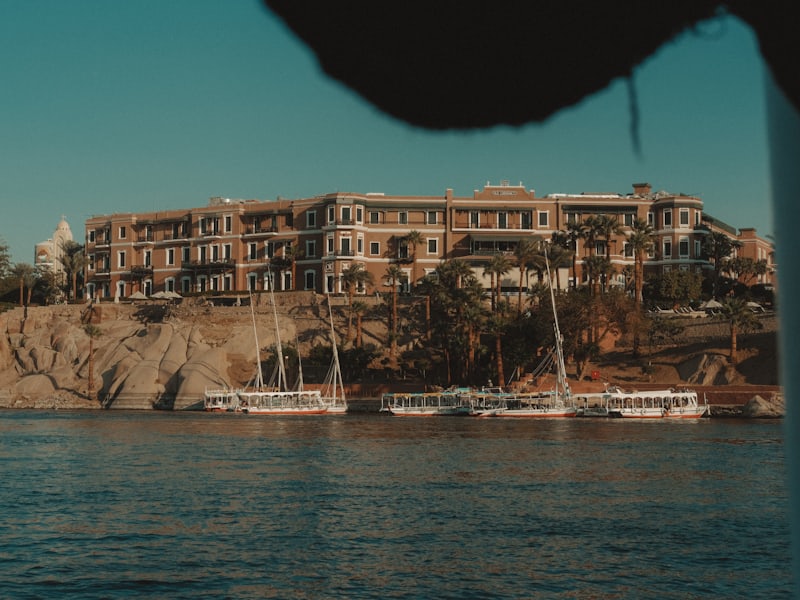
Between Luxor and Aswan the river passes some of Egypt's most beautiful temples. Here is how we work them into a slow journey rather than a checklist.
Before sailing, Luxor's east-bank temples of Karnak and Luxor and the west-bank Valley and mortuary temples — paced over unhurried days, with the early starts that beat the heat and the crowds.
The beautifully preserved temple of Horus at Edfu and the double temple at Kom Ombo, reached as gentle river moorings rather than rushed coach halts — often when the day-boats have moved on.
The hours of simply sailing — past fields and villages and herons, with nothing to do but watch — which on a small vessel become the part of the journey travellers remember most fondly.
The journey's end at gentle Aswan — the island temple of Philae, a felucca under sail at sunset, and time to be still. The rail alternative exists for those who prefer not to sail.
A dahabiya is the romantic choice — sail-powered, unhurried, weather-dependent. A small motor vessel is more predictable on a fixed schedule. We will talk through which suits your dates, temperament and budget, and we are honest about the trade-offs of each.
Three to five nights of actual sailing is the sweet spot — enough to feel the river's rhythm without it dragging. We fit that into the wider journey around Luxor and Aswan.
Yes — some travellers prefer to base in Luxor and Aswan and travel between them by rail, seeing the river temples as day trips. We design it both ways depending on what you want.
Tell us your dates and we will design the river leg around the right small vessel.
Plan a Nile journey See the full arc